Written by Heidi Siefkas / Photography provided by Getty Images, garytog/iStock, Darwin Brandis/iStock, DenisTangneyJr/E+, zimmytws/iStock, DenisTangneyJr/iStock, Marcus Jones/iStock

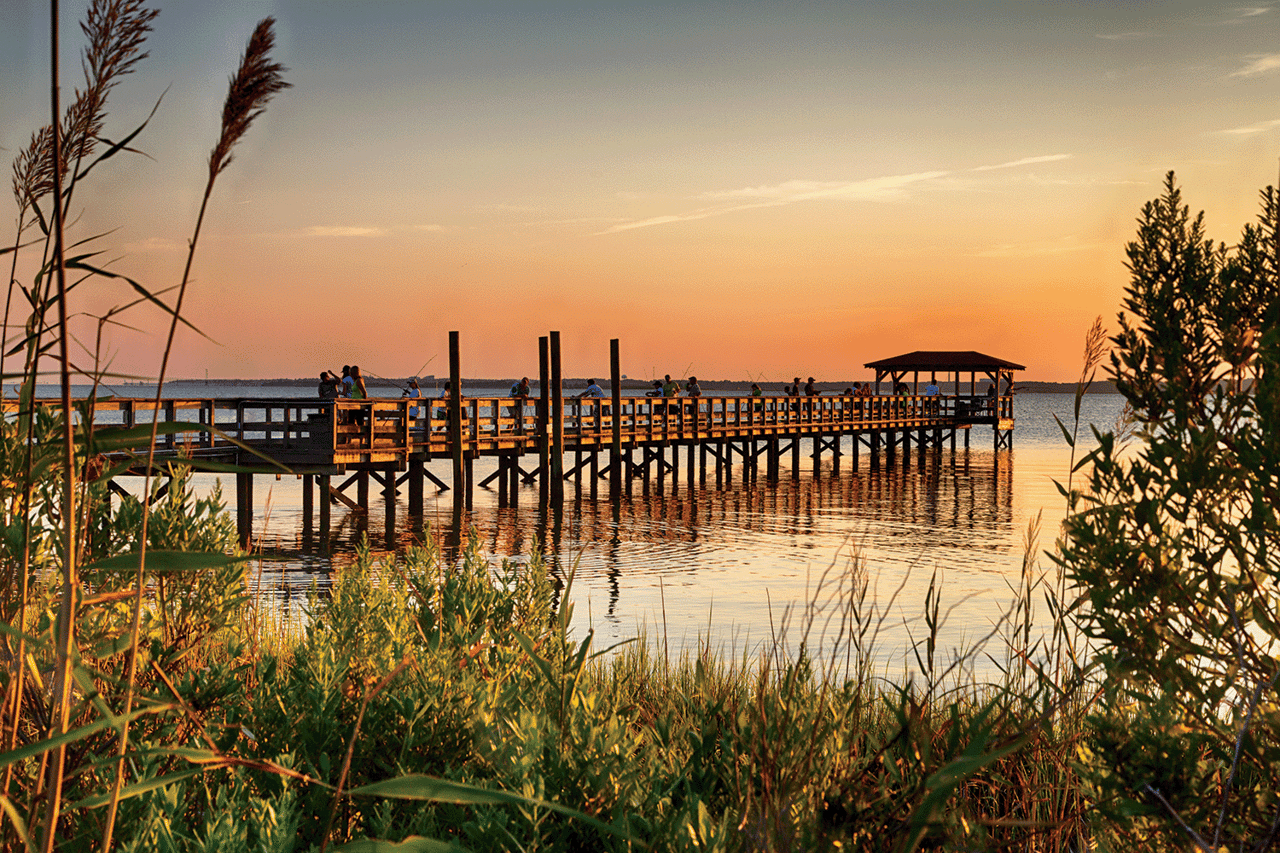
Wilmington wears autumn well. The Cape Fear River catches a bronze glow by late afternoon, Spanish moss on the live oaks downtown softens to amber, and the heavy summer crowds thin into something more leisurely. Fall is the town’s quiet peak—daytime highs slide from the low eighties in September to the mid-sixties by November.
This riverfront city, founded in 1739, lives gracefully between its working-port past and its modern turn as a foodie and craft-beverage town. Begin along the cobblestone Riverwalk, where nineteenth-century warehouses now hold restaurants reimagining Low Country classics. Order shrimp and grits, oysters pulled that morning from Stump Sound, or flounder finished in brown butter and benne seed.

Exploring Wilmington is like walking through a history book—one with salt on the spine. Pirates once worked these waters: Stede Bonnet, the so-called gentleman pirate, was captured at the Battle of the Sandbars at the mouth of the Cape Fear in September 1718. The Battleship North Carolina—the decorated World War II battleship turned National Historic Landmark—rests just across the river; a twelve-dollar Bizzy Bee water taxi shuttles you over and back. For a nightcap that pours straight from the pirate cannon, push open the hatch-like door of Barbary Coast, a dive on South Front Street (a shooting location for David Lynch’s cult classic Blue Velvet); or grab a barstool at Anne Bonny’s Bar and Grill (named for an Irish pirate who once sailed these very waters) located on a floating barge that bobs in the Battleship’s shadow.

By morning, head fifteen minutes south to Carolina Beach State Park. The Flytrap Trail loops through longleaf-pine savanna where Venus flytraps grow wild—they exist naturally only within a roughly seventy-five miles of Wilmington. For a longer leg-stretch, lace up for the three-mile Sugarloaf Trail, which winds through coastal forest and tidal swamp past Sugarloaf Dune—a fifty-foot pre-colonial rise where more than five thousand Civil War troops once camped. Prefer the water? Step aboard a Wilmington Water Tours riverboat for a sunset cruise and watch the sky move through hues of peach to persimmon to plum.

Time your visit right and you can layer art atop everything else. On the evening of the fourth Friday of every month, more than twenty downtown galleries throw their doors open for a free, self-guided crawl with many artists on-site. Visit in November for the Cucalorus Film Festival, which brings five days of indie films and live music.

When to Visit & Top Tips
Best Time to Visit: Fall (September through November) and spring (March through May) are the sweet spots—pleasant temperatures, lower humidity, and softer rates than peak summer. For a marquee weekend, target Riverfest, which runs October 3 & 4, 2026.
How to Get Around: Park once and walk; a free downtown trolley loops every fifteen minutes. Don’t miss a stroll on the Riverwalk and a sunset boat tour. Pack layers for cool evenings, bug spray for marsh-side trails, and comfortable walking shoes for all there is to see on foot.

Brewery Roundup
Cap a day in Wilmington at a taproom—the local beer scene punches well above its size.
Wrightsville Beach Brewery: Standout oysters, fish tacos, and boutique pizza with a philanthropic edge.
Flying Machine Brewing Company: A craft brewery founded on the spirit of adventure with seasonal lagers and core beers ranging from Tangerine Ale to Laid-Back IPA.
Waterline Brewing: Tucked beneath the Cape Fear Memorial Bridge, discover coastal favorites along with pilsners, IPAs, and stouts.